Tamar Mghebrishvili
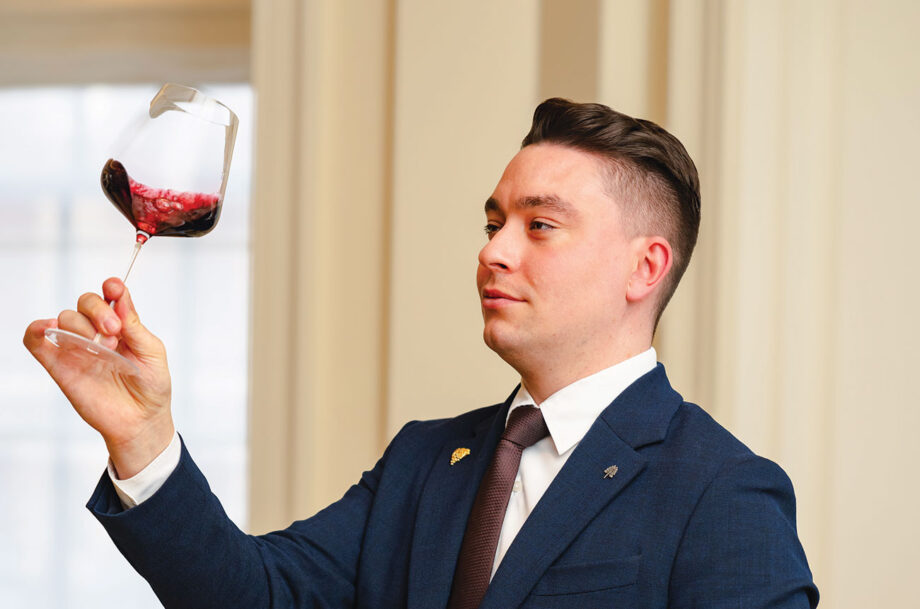
Philipp Reinstaller is a British sommelier who has already secured his place in the world of wine, having been named the UK Sommelier of the Year in 2024. His career is closely tied to some of the highest-level restaurants in Europe. In London, he worked for nearly five years at the legendary restaurant Dinner by Heston Blumenthal, where he collaborated with renowned sommeliers such as Stefan Neumann MS and Vincenzo Arnese. He was soon promoted to Assistant Head Sommelier and also earned the title of SSA Master Sake Sommelier. In 2021, he became Head Sommelier at Trivet and successfully passed the Master Sommelier Advanced Exam , one of the most challenging and prestigious certifications in the wine world.
In 2023, Philipp joined the newly opened Raffles London at the OWO, where he led the wine program for Mauro Colagreco's restaurant. Alongside all this, one particularly interesting fact stood out to us — in an article in Decanter magazine, Philipp spoke about his favorite wines, among which he mentioned Georgian wines, specifically the amber wines of Kakheti.
Wine Club had the opportunity to interview Philipp Reinstaller, where the renowned sommelier shared his experiences, thoughts on the global wine industry, and spoke about the Georgian wine region. As he is particularly fascinated by the Kakheti region, we focused on this aspect and talked with him about traditional qvevri wines and the Kakheti region.
We present to you our interview with Philipp Reinstaller:

- Philipp, tell us a bit about your journey—how did you become a sommelier, and what drew you to wine in the first place?
- I didn’t come from a traditional hospitality or wine background. After studying tourism in Austria, I moved to Munich to work as a waiter at the two Michelin-starred Tantris, which is where my love of wine developed. Watching the sommelier team in action was incredibly inspiring. The way they blind tasted wines with such precision and worked so closely with the chefs to craft unforgettable pairings really opened my eyes. It sparked a deep curiosity in me, and that’s what ultimately led me to pursue the path of becoming a sommelier.
- Do you remember the first wine that truly captivated you? What was special about it?
- One of the first wines that truly captivated me was a bottle of 1987 Pinot Bianco from Terlaner in Alto Adige which I had about a decade ago at a local restaurant in the region.
I had originally ordered the 1997 vintage out of curiosity, but the sommelier returned with a surprise - offering me the 1987 instead, which wasn’t even on the list. I was struck by how fresh, clean, and precise it was despite its age.
- When did you first travel to Georgia, and what initially sparked your special interest and love for Georgian wines?
- I first traveled to Georgia in 2022 and was immediately captivated by the warmth and hospitality of its people. At that time I was working at Trivet restaurant which is where my deeper appreciation for Georgian wines began. Trivet’s wine list is uniquely curated in chronological order, emphasizing countries with ancient winemaking traditions, such as Georgia and Armenia. This experience truly sparked my fascination with Georgia’s rich wine culture and history.
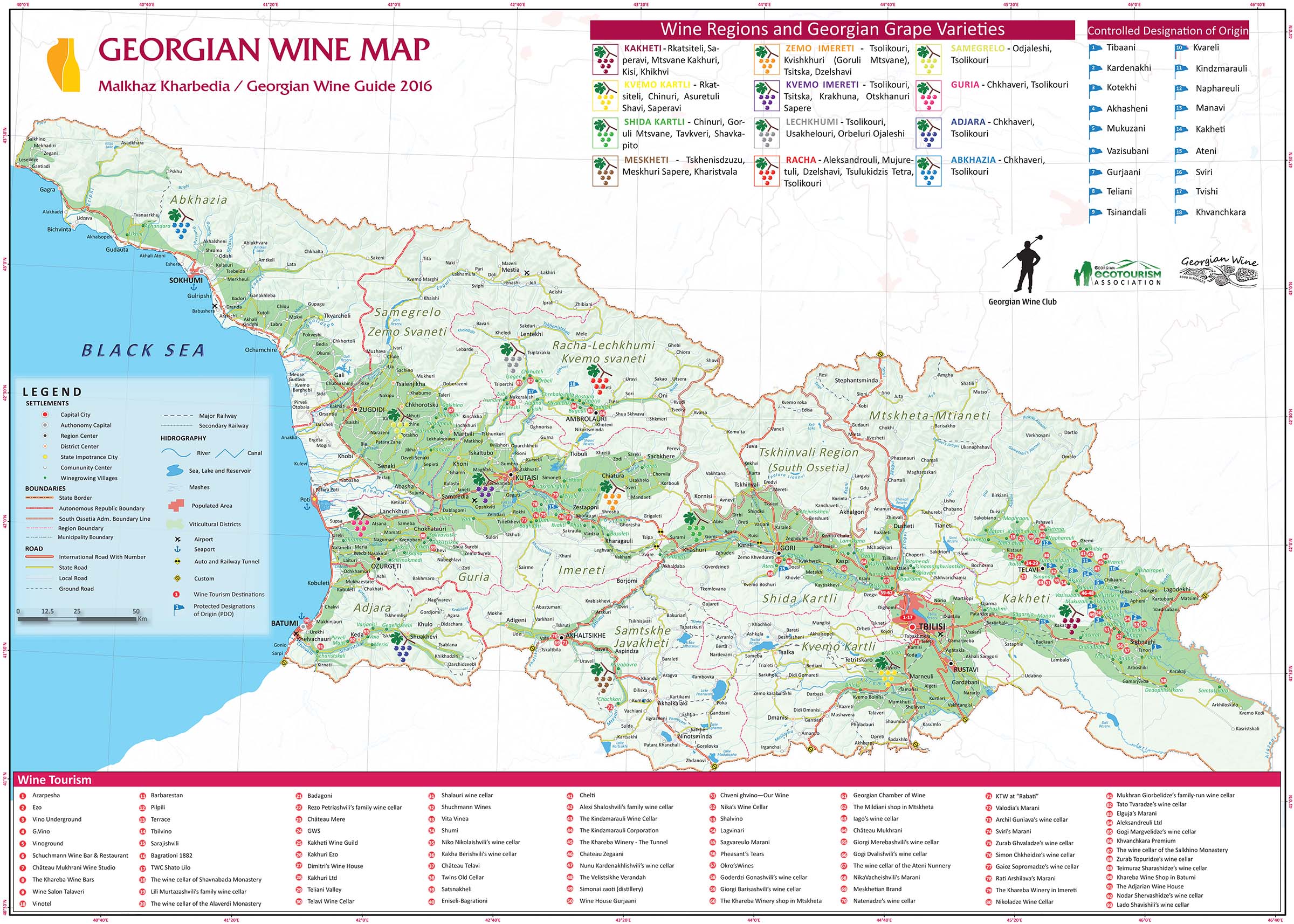
- For those unfamiliar, how would you describe the unique character of wines from Kakheti?
- Kakheti produces a wide range of wine styles, but for me, the most distinctive are the traditional amber wines. They’re incredibly expressive - offering layers of aroma, flavor, and structure. The best examples often surprise with aromatics of dried fruits, spices and floral nuances and a richness on the palate that feels textured and full, yet never heavy.
- Kakheti is famous for its use of qvevri—clay fermentation vessels. How does this traditional method impact the flavor and structure of the wine?
For me, the most striking thing about qvevri is actually its minimal intervention. The clay doesn't add any flavour and the micro oxygenation is very little due to the fact that the inside is outlined with neutral bees wax. I believe the shape of it is very important as it collects the lees and other solids in the small conical bottom, which helps avoiding overly reductive notes while enhancing the wine’s weight and mouthfeel. In the end, it’s all about the quality of the grapes. Fully ripe stems and pits contribute to structure and richness, resulting in full-bodied wines with depth and character, but without bitterness.
- Can you share a moment or experience where a Georgian wine surprised a guest or client who had never tried it before?
- I’m a big fan of using amber wines in pairings or offering them by the glass. They’re incredibly food-friendly and versatile, especially when served at cellar temperature rather than straight from the fridge, which helps avoid a clash of temperatures and creates a more harmonious pairing. One moment that stands out was when we paired a glass of 2018 Mildiani Bouquet Qvevri Khikhvi with grilled squab pigeon, persimmon and carrot. The guests were genuinely surprised by how well the wine echoed the fruitiness of the persimmon and carrot, while still having the richness and structure to match the intensity of the game bird.
- In your view, how has the global wine scene changed in the last years, and where is it headed?
- In recent years, the global wine scene has definitely shifted. From a restaurant and sommelier perspective, one of the biggest challenges is that people are drinking less. While that might be a positive trend for health, it has made things tougher for the hospitality industry.
Another noticeable change is the rising cost of wines from certain classic regions. Some labels have become so expensive that they’re no longer realistic options for many wine lists. This has pushed both sommeliers and guests to explore lesser-known regions - which can be a great thing - but it’s also led to an increase in corkage, with more guests choosing to bring their own bottles.
Looking ahead, I believe wine lists need to become more inviting again. Wine is meant to be enjoyed, not just admired, and accessibility plays a big part in that.
© Georgian Wine Club
 Print
Print