
Tamar Mghebrishvili
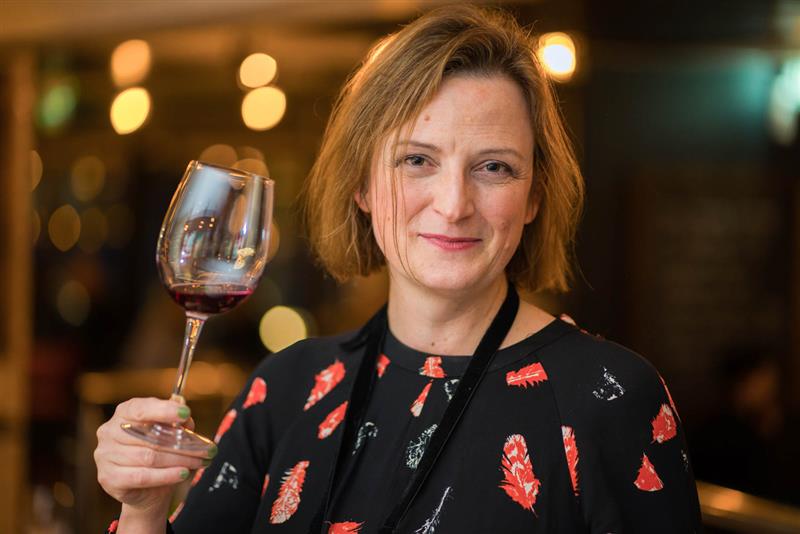
Sarah Abbott MW (Master of Wine) is one of the most authoritative and influential figures in the wine industry, whose work combines marketing strategy, education, cultural analysis, and the global positioning of wine regions. She became a Master of Wine in 2008 — a title that not only demonstrates a high level of professional competence but also requires deep critical analysis, a global perspective, and continuous research in the field.
Among Sarah Abbott’s key professional interests are the promotion of indigenous grape varieties, the discovery of lesser-known wine regions for international markets, and the modernization of wine communication. She is the founder and director of Swirl Wine Group, a strategic consultancy working with both the public sector and private wine brands in many countries around the world.
Her special connection to Georgia and Georgian wine is evident in her long-standing interest in the country’s winemaking history, technologies, and cultural values. She often highlights Georgian wine as a unique phenomenon — emphasizing the traditional qvevri winemaking method, indigenous grape varieties, and the close ties between viticulture and culture. At the same time, she speaks candidly about the challenges the industry faces — including quality standardization, branding, and strategic positioning in international markets.
Sarah Abbott’s voice is significant in the global discourse where wine is viewed not only as a product but as cultural heritage, economic potential, and an expression of human creativity. Her insights are trusted by wine professionals, policymakers, and cultural managers alike.
The online publication of the "Wine Club" — vinoge.com — conducted an interview with Sarah Abbott, in which she shares her views on the potential of Georgian wine, global trends, the importance of local culture in brand building, and how Georgia’s wine sector can become a force that embodies both traditional and progressive values on the contemporary winemaking map.
- The decline in traditional markets is driven by multiple, overlapping factors: economic uncertainty, rising costs, shifting lifestyle choices (particularly around health and alcohol), and a generational gap in engagement with wine. Younger consumers often seek more casual, transparent, and values-driven brands, and wine hasn’t always adapted well to that. I don’t see this as a short-term crisis, but rather a long-term reset. It’s an opportunity for the industry to become more inclusive, creative, and relevant again. But bear in mind that there are new markets where wine sales are rising, such as in key markets on the African continent, and India and Brasil. I wouldn’t elevate what’s happening to the global wine market to crisis. Wine, and we, are living through times of intense ambiguity, change and risk. But when have we not? Our crises are climatic, economic, political and humanitarian. Wine is just one expression of humanity dealing with those crises.
- Qvevri and amber wines are no longer a curiosity; they are gaining real traction in premium on-trade and specialist retail. Orange wine is the term used in markets such as the UK and USA, and it’s a rapidly growing category. The authenticity and deep cultural roots of Geogian amber wine resonate with consumers looking for craft and story. But wider appeal depends on how well we communicate their uniqueness without overwhelming people. Education, consistent quality, and food-pairing versatility are key to helping them find their place beyond the niche. I see the emergence of ‘fine qvevri’ – elegant wines, made with control, balance, and restrained extraction. But to be honest, Georgian traditional wines of all styles (red, white and amber) had a problem with aggressive extraction, and it takes confidence take a lighter touch. We need to help Georgian winemakers widen their exposure to the subtle yet intense wines of the world. It’s starting to happen, but I’d love (for example) to see a program that helps Georgian wine professionals get access to tasting the iconic fine wines of France, Italy, Spain, Portugal, America, Australia,,,and beyond. It’s striking to me how few Georgian winemakers have tried the amber/orange wines of the world to experience how the style is interpreted by their fellow artisans in other nations.
- Yes, I’ve tried Chacha many times – it’s powerful and full of personality. There’s a growing interest globally in regional and heritage spirits, and Chacha could follow the path of mezcal or grappa. But like those, it needs clear branding, quality standards, and a focus on sipping rather than just strength. The artisanal Chacha producers in Georgia have a great opportunity to lead the way.
- Authenticity, diversity, and heritage. Georgia offers something that mass-market wine lacks – individuality and a deep connection to place. Its defiant resurgence, indigenous grape varieties, traditional methods like qvevri winemaking, and its story as the cradle of wine all give it standout appeal.
- To some extent, yes. A flagship can act as a gateway – it simplifies the story for new consumers. But it must be representative and emotionally engaging. Saperavi is already becoming that for Georgia, with its bold character and ageing potential. But Georgia’s real strength is its variety, and the flagship must be a starting point, not the whole identity.
- The global wine industry is heading for a more fragmented but values-driven future, where sustainability, authenticity, and cultural resonance will define success. Georgia is uniquely well-positioned — but it must take an active role in shaping that future, not just observing it.
Georgia needs to move beyond its traditional solipsism. The legend of being the ‘cradle of wine’ is compelling, but when it becomes the whole story, it risks holding the industry back. The mythology can distract the Georgia wine industry from its structural weaknesses — whether that’s inconsistent quality, limited sustainability practices, or underdeveloped skills infrastructure. The past should inspire, not immobilise.
Georgian wine should be positioned as a symbol of resilience, deep cultural connection, innovation, and renaissance. It’s not just an origin story — it’s a contemporary force with the potential to lead. Georgian wine can embody what wine means at its best: the keeper of cultural value, human craft, and meaningful consumption.
To do this, Georgian wine brands need to step up and engage confidently with global conversations. Georgia should be hosting international wine events — not just participating in them. The industry also needs investment in training, leadership, and strategic skills. There’s much emphasis on promotion and superficial PR, but less investment to the processes of quality and marketing. Georgian producers are only just starting to keep detailed records and to produce the ‘tech sheets’ on their wines that are provided, automatically, by their competitors in every other market. If Georgia wants to compete in developed markets like the UK, the wineries must commit to providing product information and transparency.
It's great to see leaders emerging in Georgian wine with a long-term approach and strategic perspective to investing in quality and brand-building. There are some exciting projects collaborating with global wine consultants, and that’s positive. Despite your ancient history, the rebirth of true Georgian wine is less than 30 years old.
One critical area is sustainability. I haven’t encountered a single Georgian winery with a formal sustainability charter. In key markets such the UK, USA and Northern Europe, buyers are already making purchasing decisions based on sustainability credentials and ethical procurement. Without a proactive approach on this, Georgia risks lost sales, lost productivity, and missed opportunities for future resilience.
The future is full of potential — but Georgia’s wine sector must be both proud and pragmatic to realise it.
There is so much to celebrate in the work already being done by Georgian wine professionals. Georgia is actively engaging with global fine wine culture – from showcasing at the Merano Wine Festival to hosting the new Wine and Film Festival at Chateau Mukhrani. English-language wine publications produced in Georgia are insightful and deeply informed, reflecting the country’s intellectual leadership in wine communication. For this we must also honour the legacy and memory of Malkhaz Kharbedia, of course.
Wine tourism is flourishing, with strong links between cultural heritage, gastronomy and wine, as seen in events like the Gurjaani Wine Festival. Georgia’s upcoming feature at the National Geographic Food Festival in London is just one example of how its story resonates with global audiences. A new generation of Georgian professionals — including students of wine and wine business, and rising sommeliers gaining international recognition — are shaping a confident and outward-looking industry. And in markets like the UK, we are already seeing strong traction for Georgian wine among both trade and engaged consumers. This is a moment of transformation, resurgence and rebirth, and by continuing to work together, your wine producers can ensure that Georgia becomes a new leader in the world of wine.
- The industry is taking it seriously, and rightly so. While the quality of low- and no-alcohol wine is still evolving, the demand is here to stay, especially among younger drinkers. It challenges wine to be more inclusive and adaptable. For Georgia, the opportunity lies in its naturally lower-alcohol whites and sparkling wines – and perhaps in developing alcohol-free options that reflect its heritage and terroir. Georgia’s traditional sodas and cordials are delicious and different – and don’t forget your tea, which is increasingly being used in find-dining pairing menus.
© Georgian Wine Club